 Ep 4
9:19
Why Payments Fail: Declines, Retries and Silent Money Loss
Who can say no to a card payment, what decline codes mean, retry limits — and who loses when nobody tries again.
How money moves in the age of intelligent machines.
The tap is already old. The future is software that pays for you, in seconds, without a card, without you.
Episode 4 · · 9 min
Dinner, $48. You tap your card and the screen says DECLINED. You had the money. The second tap is approved, and nothing changed in your account between the two. Who can say no to a card payment, what the decline code really means, how many times a store is allowed to try again — and who loses when nobody does.
Every video zooms into one piece of the same map. Start from episode 1.
Ep 4
9:19
Who can say no to a card payment, what decline codes mean, retry limits — and who loses when nobody tries again.
 Ep 3
6:21
Same $100, two different fees — who writes the interchange table, and who really pays for your card's points.
 Ep 2
8:15
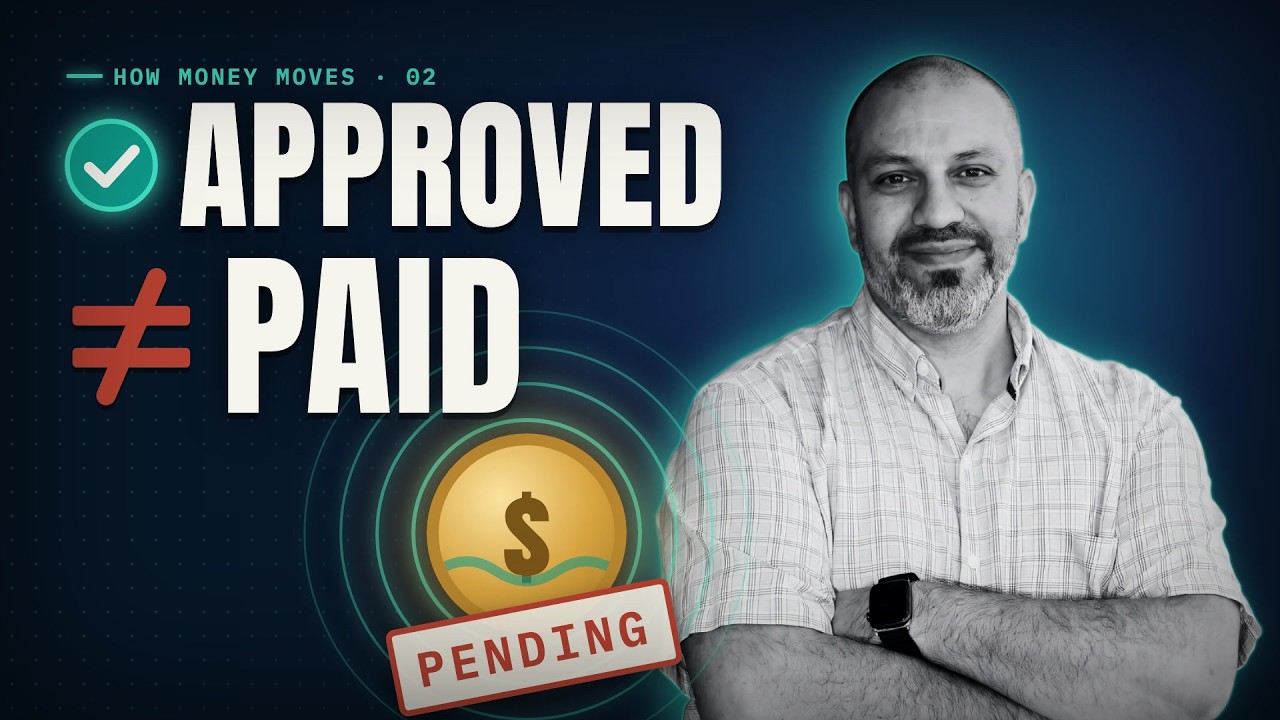
Authorization, clearing, settlement, capture and refunds — why "Approved" takes days to become money.
 Ep 1
9:34
Merchant, processor, acquirer, network, issuer — the five companies behind every tap, and where your $100 goes.
No hype, no paid sponsors, no financial advice. Honest maps of how the system works.
The full journey from tap to settlement — who the five companies are and what each one does.
Authorization and settlement are not the same thing. The gap between them is where the interesting stuff lives.
Interchange fees, network fees, processor margins — who takes what before the merchant sees a dollar.
RTP, FedNow, USDC, account-to-account — the rails being built to replace the ones we have.
When a language model authorizes a transaction, who's liable? The hardest question in agentic finance.
One new episode every Sunday.
Around ten minutes, one topic, fully explained — with diagrams, not jargon, and the sources in the description.

I build payment infrastructure for a living. Here I explain it with diagrams, not jargon. No hype, no financial advice — just the map.
Personal project. Opinions are my own and do not represent my employer. Educational content only.
What if the future is no longer a place we imagine, but an algorithm that measures us?
A corporate fable — and a warning. In a world where dashboards always glow green, decisions are made by metrics, meetings have charts instead of voices, and leaders pose instead of lead. A sharp, ironic portrait of what happens when an organization decides to automate the truth.
Personal project. Opinions are my own and do not represent my employer. Educational content, not financial advice. All company and brand names mentioned are for educational purposes only. Mention does not imply endorsement, affiliation, or sponsorship. Nothing on this site constitutes investment, legal, or financial advice. No proprietary or confidential information from any employer or client is shared here.